
This following piece is written by an anonymous athlete who chose to share their story in hopes of shedding light on the realities of eating disorders. Note: eating disorder behaviors are mentioned.
Part II will be published in the near future.
To anyone running in silence: I was once there too. I was afraid to speak up, afraid of the unknown ahead.
I want you to know that recovery is possible. I made it to the other side, and you can, too. I believe in you. You’re stronger than you realize. You are never alone. Recovery is worth it, and so are you.
Choosing Anonymity
While battling and recovering from anorexia, I carried an enormous amount of shame for what I went through, for letting myself and others down, and for not being “strong enough” to stop it. This anonymity is not about hiding. It’s about creating a space where I can be honest and vulnerable while I continue to navigate my own healing. One day, I hope to share my story under my own name. For now, this is part of my journey – a step toward acceptance and owning my story fully, safely, and courageously, at my own pace.
My Battle
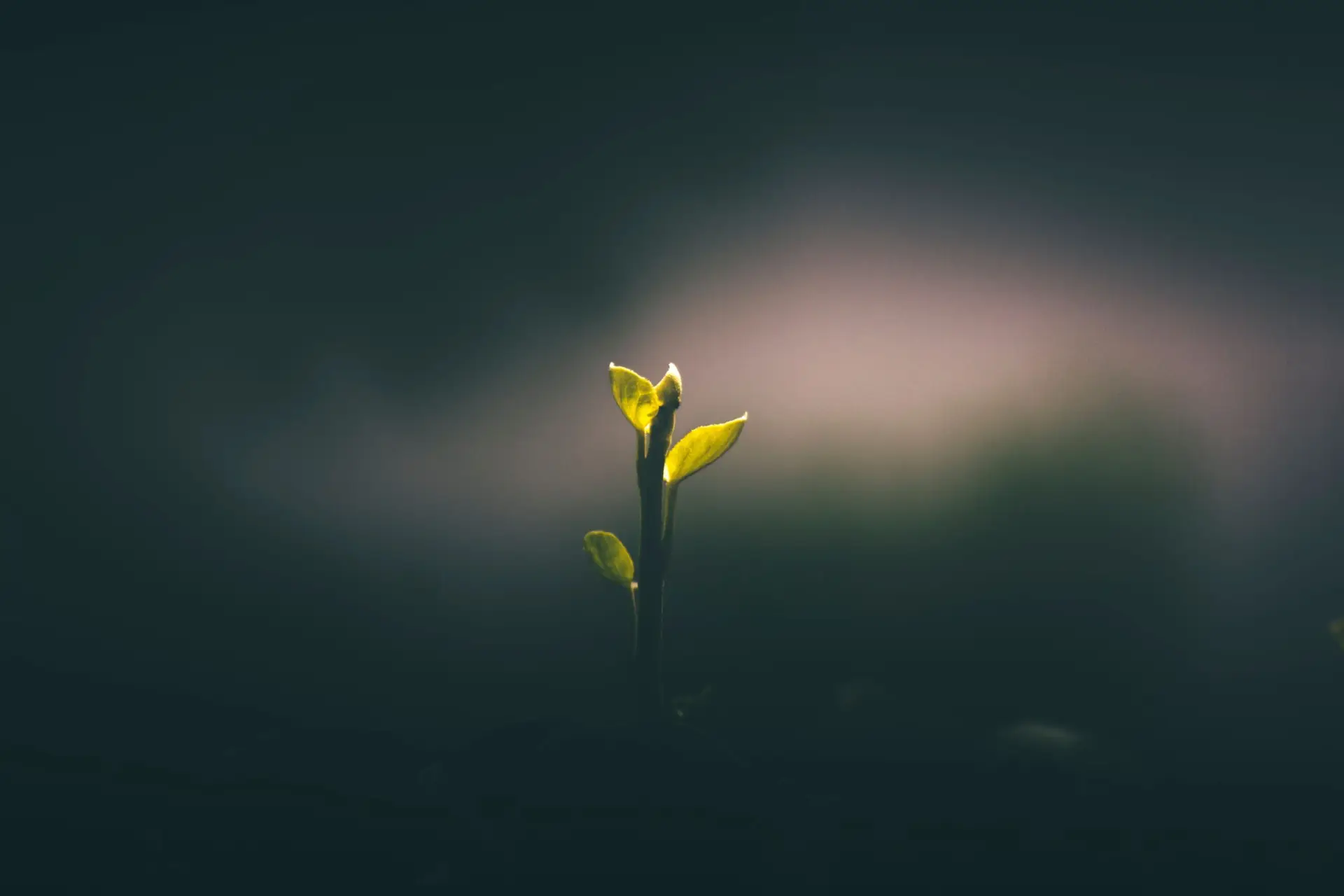
There was a simplicity to my younger self: untouched by pain, unburdened by doubt, just carried by the momentum of the world with joy. Beautiful and flourishing in the morning light. Living among a swift breeze so sweet, daydreaming of dandelions and sunflowers in a patch of fluorescent green, with seagulls soaring through a pastel sky. Through her luminescent blue eyes, an entire world of potential shimmered.
That younger version of me is my glimmer of hope, my role model.
At the age of fourteen, an unknown voice quietly entered my mind. It sat in the passenger seat, directing me on where and how to steer. It guided me to make choices that I thought were safe or helpful. The voice gained my trust. It stayed with me. Over time, it grew louder and harder to ignore. When I didn’t listen to it, I would feel overwhelmed with guilt and shame. I soon lost touch with the part of me that existed before this voice took hold. Its control became all-consuming.
It was at a soccer game when I heard “anorexia” for the first time. I had tackled an opposing player on her breakaway, which sent us flying to the ground. A man on the sideline shouted at the opposing player, “You just got beat by a ‘skeleton.’” As I braved myself against the earth, feeling every pulse beating alone, his words echoed in my ears. I didn’t know what eating disorders were, but I sensed that this label meant something was wrong with me. I didn’t know what was happening to me or why. I didn’t even realize that I was thin. All I felt was fear, loneliness, and confusion.
If I could talk to my younger self, I would look her in the eyes and tell her, “I am here for you.” I would embrace her with a warm hug. I would tell her that she does not have to be afraid, that help is available, and she is not alone.
I tried, wholeheartedly, to get better on my own. There was a time when I thought I recovered fully. But without professional help, I could not see the ways my eating disorder still shaped me. Ultimately, this led to a relapse, where my eating disorder spiraled into something more complex.
Every time I tried to face my fears, I felt paralyzed. It was as if the eating disorder part of my mind began invading the rest, each echo of its voice rising in a crescendo, tearing away at the parts that once made me whole. My eating disorder took full control of the steering wheel, driving me to a lackluster place far from my colorful beginnings. This voice intertwined with my own until I could no longer distinguish the difference.
Behind the Accolades
I was ranked one of the top athletes in my sport in the country, but no one saw what was happening behind the accolades. No one saw the harrows of running miles in the middle of the night and excessively exercising through injury and exhaustion or chewing and spitting out food and hiding it in closets. It felt like it was just me and my anorexia against the world, as if the disorder made me stronger, more disciplined, more resilient. It became a way of life for me, and I no longer questioned my choices.
Being underweight led to insomnia. I vividly remember one night, after multiple days without sleep, that I bundled myself in layers and blankets, desperate to find warmth. Tears streamed down my face as I thought, What did I do to myself? How did this happen?
The next morning, I received a message from one of my coaches. He said he thought I had gotten too thin, that he could see me getting slower and weaker with each passing week. He didn’t want me to continue training until I got healthier. All I could think was that it wasn’t supposed to be this way. It had been an accident. It was truly an accident! For the first time, I saw myself – not as I wanted to be, but as what I had become, a frightened, albeit determined girl, trying desperately to reach her goals. I wanted to recover, but I believed that my eating disorder was the key to my athletic success, despite my coach saying otherwise. I believed he was lying to me.
This relentless voice made me blind to the ways I was hurting myself. When I looked at the number on the scale or my reflection in the mirror, it was never enough. I was too afraid to give myself the chance to see what lay on the other side. I trusted my eating disorder – those swift and cunning eyes – more than anyone around me.
Running in Silence
Deep in the grip of my eating disorder, life was quieter. No noise, just static – but there was pressure constantly building beneath my pallid skin, pressure I could never outrun. Running was the one place where I could feel numb. Anytime I felt ashamed or overburdened with thoughts, I ran. I ran until I could feel nothing except the sounds of my breath as I gasped for air. I am not sure exactly what running symbolized to me. I am not sure if I was running away from myself or my eating disorder. But it led me to a place of emptiness, a void where I felt nothing at all. Yet somehow, it also made me feel alive.
The eating disorder distorts everything. It distorts how you see yourself, how you feel about your body, and how you relate to food. It makes you feel like everything in life must be controlled. It convinces you that it’s the only thing keeping you safe.
When you’re in it, you can’t always see it. I hear things like, “Why can’t you just eat?” Those comments, though often asked kindly, made me feel unseen. They reflected how deeply misunderstood eating disorders are – not just by society, but also sometimes by those closest to us.
What most people don’t realize is that recovery isn’t just about eating again. It’s about rebuilding an entire identity, learning how to trust your body, and reprogramming your neural networks. For many of us, the desire to be small isn’t really about appearance at all. It’s about control, safety, and finding a sense of stability in a world that feels unpredictable. It’s a coping mechanism that quietly takes over until it becomes the only language we know.
As time went on, my insomnia grew more severe. My body became more unstable, slipping away beneath me. Nights without sleep stretched endlessly, and all that remained was the bleak cold. During our championship competition, sleep deprivation set in. Drowsy and disconnected, running on autopilot, I was unable to feel anything but exhaustion.
In a world where we are told to “dream big” and that “dreams come true,” anorexia stripped me of my imagination – the vibrant dreams I once held close. Who am I without my dreams? That loss of color, of wonder, was what scared me most. And in this moment, the eating disorder that I trusted had now become a paramount fear. As I sat there, picturing the snow melting into a field of spring blooms, I realized I was ready to step into the warmth again. If I didn’t, I knew I would never make it out of this endless winter.
Choosing Recovery
The bravest thing I have ever done was commit to treatment. Recovery requires self-determination, motivation, and resilience. And it is possible. In the early stages, without proper nourishment, I couldn’t see the kindness in others’ actions. Those trying to help me felt like threats. This intensified my eating disorder thoughts and behaviors. I manipulated weigh-ins, lied during appointments, denied my disorder, and pretended I got my period. It was hard to see that the health care professionals were only trying to help.
Recovery meant letting go of the parts of myself I had clung to. These parts kept me comfortable but slowly took my life away. At the height of my eating disorder, I no longer questioned that I was sick because it all became normal to me. I became content with the way things were and the way I lived. Recovery was rewiring my brain, and I had to reprocess and relearn right from wrong, normal from abnormal.
It was the optimism of my younger self that saved me. Her light, though distant, guided me forward. Over time, I began to understand my eating disorder. I could see ways it affected me, and I could distinguish my healthy voice from the voice of the eating disorder. Every decision became a fork in the road: to choose my voice or the eating disorder’s voice.
It wasn’t just mentally draining – it was also physically painful. My GI system had slowed. As my stomach relearned how to accept nourishment, I constantly felt bloated and nauseated. At times, my body struggled to digest the food I was trying to give it. My mind was just as exhausted, worn thin from the constant fight.
It was a long and grueling battle, and one, at first, I did not believe was possible. Not every day was perfect. But I woke up each day with the intention to defeat my eating disorder. I learned to believe in the beauty of my dreams, find my “why,” and embrace optimism. I no longer let my eating disorder isolate me. Instead, I leaned on my teammates, friends, coaches, and family, becoming vulnerable and sharing my struggles – and that changed my life.
Clarity and Colors
Once I recovered, for the first time in years, I could see the world clearly. My vision was no longer clouded from brain fog, and I could fully take in my surroundings, process them, and engage with everything around me. My emotions, too, were no longer numbed. I could feel sadness, love, and joy. The dreams that were slipping away became tangible again. Recovery gave me back the ability to experience life in all its beauty, to be able to discover the richness of the world with bright eyes.
This didn’t come easily. For a long time, I felt almost recovered – like I was close but still tethered to the eating disorder in some way. It’s a confusing stage. I was not where I used to be, but I was not fully free either.
I accepted that this in-between stage was where I’d be for the rest of my life. There was some peace with that, until I realized it didn’t have to stay that way. Recovery doesn’t have to remain in that gray area. You can keep moving forward, even if it feels slow, unclear, or impossible. It’s a journey, your journey, and there’s always room for growth and change. It’s about healing piece by piece. So be patient with yourself, but never stop fighting, no matter how hard it gets.
Through recovery, I discovered that the bravest thing we can do is live by the truths in our hearts – to hold fast to our values, even when scared. I learned to let go of what is ephemeral and instead cherish what endures: kindness, connection, truth. The world will always try to measure you by numbers, times, or appearances, but those things fade. What remains is how you love, how you show up, and the kaleidoscope of light, laughter, and quiet moments that make a life whole.
A Message of Hope from One Athlete to Another
To anyone struggling: Your disorder is not a choice, and it is not your fault. You do not have to confront this battle alone. There are wonderful professionals and multidisciplinary treatment teams who can provide a safe and nurturing environment to guide you during this challenging time. You are stronger than you may believe and recovery is worth it. Your story, like mine, is one of resilience, a testament to your strength and courage, even in the face of adversity. One is never defined by hardships encountered, but by the endurance, grace, and bravery shown in overcoming them. No one can take your story away from you.
And perhaps most importantly, you learn that healing doesn’t just restore what was lost. It creates space for quiet courage to take root, to discover something new: a life that’s yours, fully and freely.