
Jeremy Susi wears many different hats. He is a committed husband, loving father, dedicated teacher, passionate coach, and avid distance runner. He says, “Those are the obvious identities that the entire world can see with plain eyes, but deep down I’m just a human being trying to navigate this complicated thing called life.”
Jeremy shares a piece of his journey below. Please note: Eating disorder behaviors mentioned.
The 5:00 a.m. alarm screeches. Reaching blindly toward the device responsible for this deafening tone, I tap all corners of the nightstand frantically to cease the annoyance. After accidentally knocking John L. Parker’s Once a Runner to the floor, I finally grasp the phone and hit snooze. My head immediately drops back onto the pillow, and I slip my exposed shoulder and arm back under the warm blankets.
Perhaps today will mark my first successful sleep-in. After all, that’s what normal people do on a Sunday, right? Besides, I’m twenty-eight years old, and I don’t have any legitimate responsibilities to worry about during this wide-open weekend.
Five minutes later, I toss the covers off my sweaty body, which has begun to perspire in disgust after last night’s consumption at a neighborhood BBQ.
Nachos.
Buffalo chicken finger sandwiches.
Pizza
Cake.
Cookies.
Another piece of cake.
More cookies.
Candy.
The most frustrating part of this reflection has nothing to do with the calorie intake. It has everything to do with the isolating, secretive, and self-loathing spiral that led to those helpings as the night ended. Not to mention, the guilt I felt over the childish regression to binge secretly when sneaking those final few desserts into the bathroom, irrationally paranoid that my wife and friends were judging me for all that I’d gorged on previously.

Ordinarily, I’m excited for my morning workout, so much so that I naturally wake up five to ten minutes before my predawn alarm even sounds. But last night’s actions weren’t ordinary at all – that is, when compared to the balanced lifestyle I’ve concertedly worked toward over the past three years. And now, I find myself paying the unpleasant price.
During all thirty minutes of my pre-exercise routine, I continually reconsider the possibility of returning to bed.
Why do I feel the need to force this workout? Especially at 5:30 a.m.? Would it kill me to take one day off?
Nonsense. It’s been proven time and time again how that story will unfold.
If you give an inch, they’ll take a yard.
In other words, if I give myself permission to skip this workout, the demons will take hold of my steering wheel for the remainder of the day.
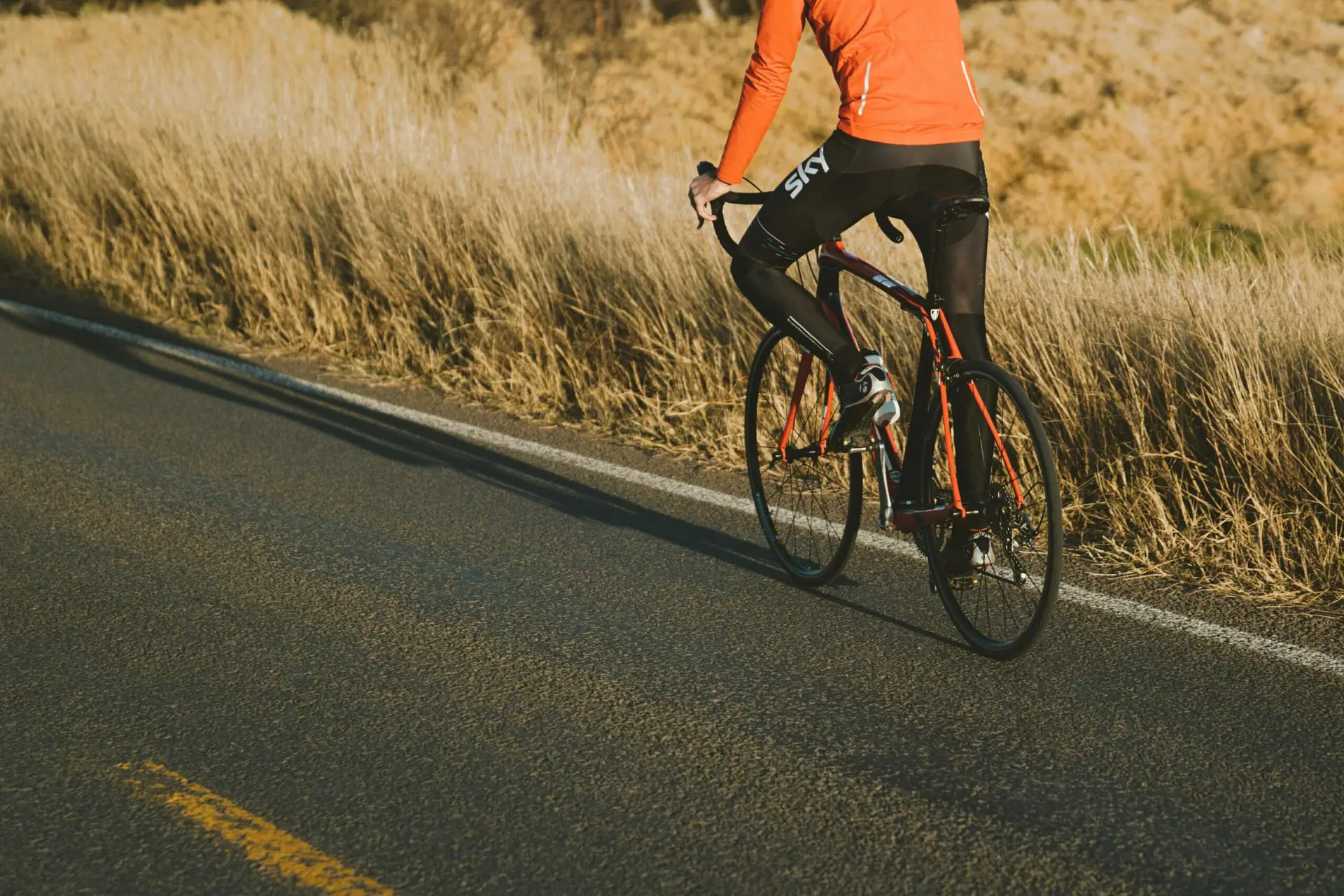
Half an hour later I jump onto my bike and pedal as hard as I can to the steepest hill in town. I can hardly wait for the onset of physical fatigue.
As soon as I reach the pinnacle of any threshold workout – when my heart races, my lungs strain for oxygen, my nostrils inhale intensely, and my legs burn – I know that I’ve defeated the demons, those self-centered, woe-is-me, life’s-too-hard voices that have ravaged my life since the age of sixteen. The problem is, it takes significant effort to reach that pinnacle. And yesterday’s triumphs rarely bleed into today’s outlook. The procedure resets itself each morning. For the past three years, I’ve learned to embrace the long view process required. But after last night’s slip-up, I’m not so sure I have the strength and patience to do so.
~
My earliest recollection of a binge episode spans back to my junior year of high school. And as is the case for many ignored and untreated eating disorders, my illness found ways to morph its shape and form while my life did the same.
As a teenager, I’d intentionally wait until I was the last family member awake before inhaling exactly 50% of every chip bag, cracker box, cookie package, and ice cream carton, making certain to never leave any evidence in the trash. As a college student, I’d sneak my way out of social gatherings to spend a reckless amount of dining dollars on pizza, burgers, French fries, and milkshakes. As a newly hired Physical Education teacher (how is this for cognitive dissonance) I’d combine eight dollar-menu items from McDonald’s, Burger King, and Taco Bell with cheap snacks from the nearest 24-hour pharmacy. And in my mid-twenties, I’d hit an all-you-can-eat buffet to see if I could fit a modest serving of all seventy options into my stomach.
Most people would think that someone who chooses to eat like this has an audaciously irresponsible personality: careless about success, body image, social status, and societal impact. These choices undoubtedly affirm a lack of discipline, strength, commitment, and intelligence. But what if those binge episodes weren’t really a choice? What if they felt like an existential need, such as breathing and sleeping? And what if their foundation was built upon the victim’s exorbitant care for success, body image, social status, and societal impact – not lack thereof?
For a vast majority of my decade-long battle with binge eating disorder, I knew that my relationship with food was unhealthy. Not only did I acknowledge this rather obvious fact, but I made legitimate sacrifices to combat my illness. I read self-help articles, tracked dietary choices, remained abstinent of alcohol consumption, documented athletic performance, and journaled emotional hardship. With every newfound tactic to implement, I’d enjoy several days – or if I was lucky, a couple weeks – without a single binge. It gave me a restored ability to see the world in color, view the glass half-full, and enjoy a sense of self-confidence. That is until life decided to throw another wrench in my plans, upsetting the near-perfect equilibrium I’d fought so hard for. Thus, I would jump start the vicious cycle all over again.
~
As I ride toward Oronoque Hill, I stare at the ground, hold my breath, and plug my nose while passing the town bakery, pretending I don’t remember the countless visits for an emotional plunge into half a dozen Danishes. The all-too-familiar temptations whisper a fool-proof plan: screw the workout, return home for some cash, and let loose on a box of apple fritters, cinnamon rolls, and glazed donuts.
For a moment, I stop pedaling and consider the idea, which would be a shameful reenactment from the past. If you can’t finish this workout, do you really think you’ll be able to complete a 100-mile run in October? Tucking my chin to chest, I rise off the seat, lean forward over the handlebars, and begin to pump with fury.
During the sixth hill repeat, I feel the very beginnings of inflammation in my left knee. This moment is expected. In fact, my knee is the very reason I’m on a bike right now, because it’s been jacked up since running 600 miles during the first five weeks of COVID-19 lockdown. As absurd as that mileage may sound to the average citizen, I know full well that my body could have handled it without injury had I fueled properly. But hindsight is 20/20, and this injury isn’t the first time my eating disorder has led to a devastating outcome. If you can’t fuel properly during a two-hour ride, how can you expect to eat every thirty minutes during the big run this fall? Despite my old habits of restricting calorie intake during exercise, I squeeze two mouthfuls of double-strength Gatorade while coasting the steep decline.
When my motivation runs dry on the twelfth repeat, I can’t help but think about the myriad of household comforts I’ll enjoy after the ride: an ice-cold blend of banana, oats, chia seeds, and peanut butter; a cool shower and clean clothes; an extensive hug and talk with my wife; a writing session and intermittent icing.

For the first time all morning, I glance at my watch, despite an inclination that its numbers won’t excite. Sure enough, my intuition is verified: I’ve only completed half of my self-prescribed stimulus.
If you can’t mentally engage for two hours, how can you expect to do so during a 24+ hour run in four months?
Though I’d love to return to those privileged comforts this instant, I take a deep breath and remind myself that they’re not going anywhere, and they’ll feel undeniably better if I complete the entire workout.
Focusing primarily on biomechanics, with a sprinkling of motivational mantras, I eventually lose track of how many repetitions I’ve endured.
Engage the core.
Chest over knees.
In through the nose.
Out through the mouth.
Stay present.
Drive the glutes.
Keep fueling.
Be grateful.
Slowly but surely, the monotony turns sacred. Life develops rhythm. And the challenge becomes cherished. When I lift my bottle for a replenishing blast, I’m pleasantly surprised by its emptiness. For the second time all morning, I glance at my watch. It reads two hours and eight minutes.
~
Five Year Addendum:
The story above was written at the end of 2020, so I’ve had nearly five years to reflect. To say I’ve experienced a few changes in my life would be an understatement.
- In 2020, my wife and I were the only residents in our home. In 2025, we now have three beautiful daughters.
- In 2020, I taught in an interdistrict magnet high school and coached volleyball, basketball, and baseball in different schools/districts. In 2025, I now teach in an inner-city high school and coach cross country, indoor, and outdoor track in the same building.
- In 2020, my running goals exclusively revolved around the 100 mile distance. In 2025, I now train and race various distances on the road, targeting anything from 1 mile to the marathon.
- In 2020, I had yet to seek professional help with my eating disorder. In 2025, I now have a therapist and eating disorder mentor.
- In 2020, binge eating disorder was causing days-long mental health spirals that negatively impacted my relationships, professional performance, and overall wellness. In 2025, I’m still working through disordered thoughts, feelings, and behaviors related to food, but they no longer have the power and control to knock me off my tracks for more than a few hours.
If I’m being transparent, I wish I could rewrite that last bullet point. I wish I could say that I’m 100% cured from binge eating disorder, and that I never impulsively eat to excess. I wish I could say that I’ve developed perfect self-control with eating and exercise, never over-doing things on either end. And I wish I could say that I’ve perfected the craft of intuitive eating, enjoying all categories of foods without ever attaching judgement. But those statements are simply not true (at least for now).
What I can say, however, is that significant progress has been made – albeit, nonlinear. Two steps forward, one step backward. That’s one of the more recent learnings that I’ve been forced to reckon with and embrace, Without self-reflections, thoughtful adjustments, and courageous pivots, I’d remain stagnant and unchanged.
At the end of the day, I hope that I can be an example of a flawed being who’s just trying his best to make a positive impact on those I meet.